

As Name, Image, and Likeness (NIL) continues to reshape the landscape of college athletics, technology has become a central component of how athletic departments manage opportunity, communication, and visibility for student-athletes. From athlete marketplaces to social media analytics tools, the number of platforms involved in NIL operations continues to grow.
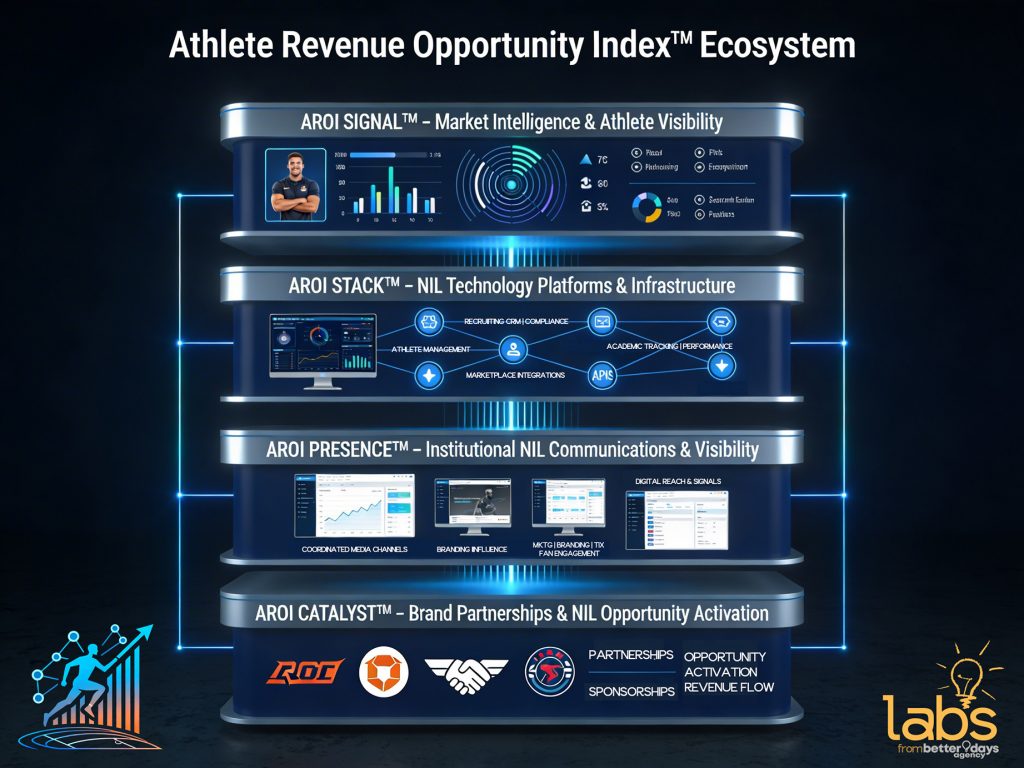
For many athletic directors, the challenge isn’t simply adopting NIL technology—it’s understanding how these tools fit together as part of a broader NIL technology stack.
A well-structured NIL tech stack allows athletic departments to create a more coordinated ecosystem where student-athletes can pursue opportunities responsibly while institutions maintain clarity around communications, brand partnerships, and compliance.
The Expanding NIL Technology Ecosystem
Today’s NIL environment involves multiple categories of technology that support both institutional operations and student-athlete opportunities. These platforms typically fall into several core areas:
- Roster CRM systems
- Social media analytics tools
- Athletic department communications platforms
- Brand and NIL marketplaces
- Market intelligence and visibility platforms
Understanding the role of each category can help athletic departments create a more cohesive NIL strategy that benefits athletes, universities, and community partners.
Roster CRM Systems and Athlete Relationship Management
Roster management systems are often the foundation of an athletic department’s digital infrastructure. These platforms serve as a central hub for athlete information and communication workflows.
Modern roster CRM systems allow athletic departments to manage:
- athlete contact information
- team and departmental communications
- digital athlete profiles
- media and brand engagement opportunities
- internal coordination between staff and athletes
When integrated effectively into NIL operations, these platforms help institutions maintain an organized environment where opportunities and communications remain clear and structured.
Social Media and Athlete Brand Visibility
Social media has become one of the most important drivers of NIL opportunity. Platforms like Instagram, TikTok, YouTube, and X provide student-athletes with the ability to build audiences and connect with fans.
Technology tools that monitor social media engagement help athletic departments and athletes understand:
- audience demographics
- engagement trends
- follower growth patterns
- brand alignment opportunities
These insights help student-athletes develop stronger personal brands while giving athletic departments a clearer view of how their athletes appear within the broader NIL marketplace.
Communications, Outreach, and Engagement Platforms
Effective NIL programs depend on strong communication between athletes, athletic departments, compliance offices, and potential brand partners.
Communications and outreach platforms help institutions manage:
- NIL education resources for athletes
- announcements about opportunities
- internal coordination between departments
- communication with local businesses and community partners
These tools create a more transparent and organized NIL environment, ensuring athletes have access to resources while institutions maintain consistent messaging and governance.
NIL Marketplaces Connecting Athletes and Brands
NIL marketplaces have become one of the most recognizable components of the NIL ecosystem. These platforms allow brands and organizations to discover student-athletes and propose partnerships.
Typical marketplace features include:
- athlete discovery by sport, school, or geography
- brand partnership proposals
- campaign management tools
- payment and contract workflows
While marketplaces can provide valuable access to opportunities, they should function as one part of a broader NIL strategy rather than the sole driver of athlete engagement.
Market Intelligence and NIL Visibility Platforms
In addition to marketplaces, a newer category of NIL technology has emerged: market intelligence platforms that help institutions better understand athlete visibility and opportunity signals.
One exemplary example is Student Athlete Score, a platform that provides valuable insights into how student-athletes appear across the NIL landscape. Rather than focusing only on follower counts, tools like Student Athlete Score evaluate digital engagement, audience signals, and marketplace visibility to help athletes and institutions better understand opportunity potential.
For athletic departments, platforms like Student Athlete Score can help answer key strategic questions such as:
- How visible are our athletes within the NIL ecosystem?
- Where do the strongest opportunity signals exist?
- How does our institution compare to peer programs in terms of NIL visibility?
This type of intelligence allows institutions to take a more strategic approach to NIL rather than relying solely on transactional deals or short-term opportunities.
Why NIL Technology Strategy Matters for Athletic Departments
Adopting individual NIL tools is relatively easy. Building a cohesive NIL technology strategy is far more important.
Without alignment between platforms, athletic departments can end up with fragmented systems where:
- athlete opportunities occur in isolation
- communications between departments become inconsistent
- technology tools operate independently rather than collaboratively
When NIL technology platforms work together, institutions gain a clearer view of their NIL ecosystem and can better support student-athletes pursuing opportunities responsibly.
A unified technology approach helps institutions strengthen:
- athlete visibility and brand development
- institutional NIL communications
- community and brand partnerships
- compliance and operational clarity
Five Questions Athletic Directors Should Ask About Their NIL Tech Stack
As NIL technology continues to expand, athletic directors may find it helpful to evaluate their current technology environment through a strategic lens.
Here are five questions worth asking:
1. Are our NIL technology platforms working together or operating independently?
If systems such as roster management, marketplaces, and communications tools are disconnected, institutions may miss opportunities to coordinate athlete visibility and engagement.
2. Do we have a clear understanding of how visible our athletes are in the NIL marketplace?
Tools that measure digital engagement and opportunity signals can help institutions better understand where opportunities exist and how athletes appear within the broader NIL ecosystem.
3. Are student-athletes receiving consistent NIL education and communication?
Technology platforms should support education and outreach, ensuring athletes understand the opportunities available while maintaining focus on academics and athletics.
4. Are our technology tools helping us connect with community partners and brands?
NIL should not be limited to digital marketplaces. Institutions benefit when technology also supports relationships with local businesses and community organizations.
5. Does our NIL tech stack support a unified institutional strategy?
The most effective NIL environments are those where technology platforms support the broader mission and culture of the athletic department rather than operating in isolation.
Looking Ahead: Technology as a Strategic Advantage
As NIL continues to evolve, technology will remain a defining factor in how athletic departments support student-athletes and manage opportunities.
The institutions that succeed in this environment will not simply adopt new platforms—they will take a strategic approach to how those platforms work together.
By integrating roster CRM systems, communications tools, marketplaces, social media analytics, and intelligence platforms like Student Athlete Score, athletic departments can create a more organized and effective NIL ecosystem.
Ultimately, the goal of NIL technology should be simple: help student-athletes pursue opportunities responsibly while strengthening the overall visibility, integrity, and community engagement of collegiate athletics.